
- Progress Toward Resource Circulation, Waste Reduction and Water Reduction Targets
- Resource Circulation and Waste Reduction Initiatives in Products
- Resource Circulation and Waste Reduction Initiatives in Production
- The Brother Group's Water Usage Reduction Activities
- Water Intake, Wastewater Volume, Volume of Water Recycled
- 2026 CDP Questionnaire

The vision aims to ensure sustainable use of resources in business operations and minimize the environmental impact due to wastes.
Toward 2050, the Brother Group will maximize resource circulation to ensure the sustainable use of resources and to minimize the environmental impact due to wastes.
Main efforts: Expansion of circular-economy-based businesses, reuse of products and parts, use of recycled materials, etc.
Progress Toward Resource Circulation, Waste Reduction and Water Reduction Targets
Two medium-term targets for FY2030 regarding resource circulation are set in the Brother Group Environmental Vision 2050. To achieve these targets, we are working to reduce waste and water usage by promoting resource circulation in our manufacturing and production activities.
Medium-term target for FY2030
- Reduce the amount of virgin materials used in products*1 by 25%*2 by FY2030 compared to the FY2022 level through the expansion of circular-economy-based businesses and materials recycling.
- The group's manufacturing facilities continuously endeavor to ensure efficient use of water resources and proper treatment of wastewater.
- Including packaging materials
- Applies to the Printing and Solutions Business
In FY2025, the amount of virgin materials used in products was reduced by 22.5% compared to the FY2022 level.
The Brother Group believes that this result was driven by initiatives such as reducing product size and weight, expanding the use of recycled materials, and switching to packaging materials designed with recyclability in mind. However, these improvements also reflect temporary factors and changes in the external business environment. In addition, the Group recognizes that the amount of virgin materials used may increase in the future as production and sales expand in line with business growth. Going forward, the Brother Group will continue to strengthen resource circulation initiatives across the value chain while promoting both the effective use of resources and the reduction of environmental impacts, thereby contributing to the realization of a sustainable society.
Resource Circulation and Waste Reduction Initiatives in Products
The Brother Group engages in resource circulation to address the environmental issues resulting from resource use, such as depletion of natural resources and pollution by waste, etc., as well as to reduce CO2 emissions.
Specifically, we aim to reduce the amount of virgin materials used in products by 25% from FY2022 levels by increasing the proportion of recycled plastic materials used in our products, replacing plastic parts to paper-based materials, and promoting the use of reused goods.
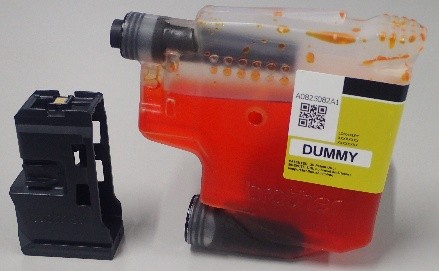
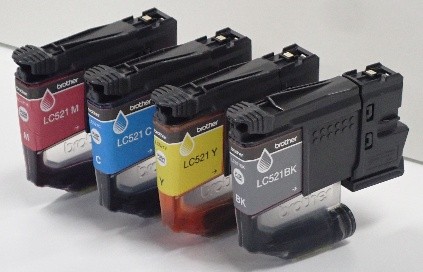
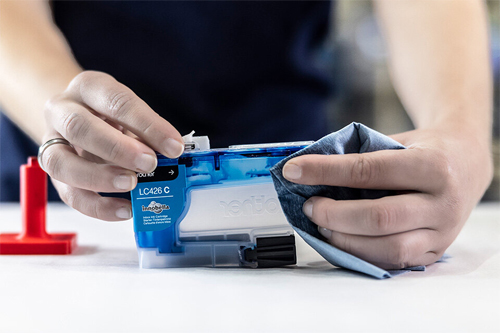
Improving ink cartridge remanufacturability through blow molding
Conventional ink cartridges manufactured by injection molding have a complex shape, making it difficult to completely remove residual ink and other contaminants during the remanufacturing process. To address this issue, the Brother Group undertook the challenge of developing an ink cartridge with fewer seams, using blow molding—a technology so challenging that it is often likened to shaping a complex form by inflating bubble gum. Brother became the first in the world to successfully commercialize this innovation, which reduces residual contamination and improves cartridge remanufacturability.
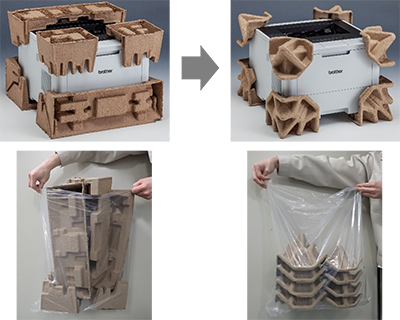
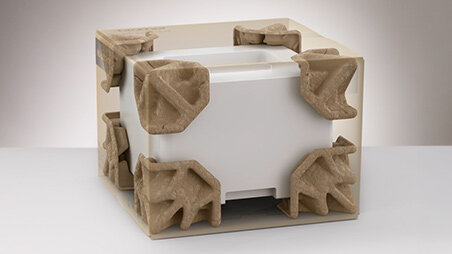
Compact and lightweight molded pulp cushioning material
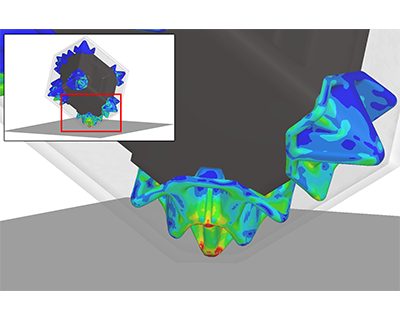
Compared to conventional cushioning materials that cover the entire product, Brother Industries' engineering capabilities have reduced their size and resource consumption, achieving a 33% reduction in CO2 emissions during material manufacturing and a 7% reduction in the volume of product boxes. Furthermore, drop simulations were used for Brother's proprietary molded pulp cushioning material, making it possible to reduce the number of prototype iterations, significantly shorten the development period, and improve the design efficiency.
Exploring recycling possibilities for the sake of the future global environment
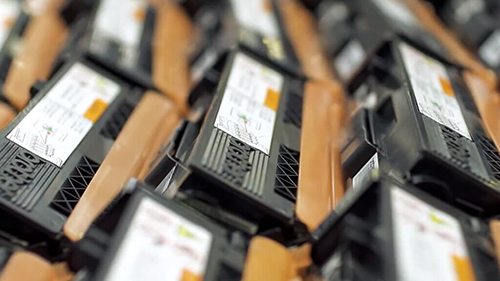
In Europe, we started a recycling program in 2004 by adopting newly developed recycling-compatible toner cartridges.
Thanks to an automated recycling system we introduced, we are able to offer the same high quality in recycled cartridges, as well.
In 2014, the Brother Group received two prestigious awards in the 2014 Responsible Business Awards given out by Business in the Community, a U.K.-based NPO. The group's contribution to communities and the environment was recognized.

Contents of SDGs STORY
Resource Circulation and Waste Reduction Initiatives in Production
The Brother Group is continuously engaged in waste reduction activities. In FY2025, the scope of aggregation was expanded to include the Domino Group, resulting in an increase in waste volume compared to FY2024.
Brother Machinery Xian Co., Ltd. introduced a vacuum distillation waste liquid treatment system equipped with a highly efficient heat circulation function, which reduced the amount of waste liquid by approximately 88% compared to before its introduction. In addition, the factory continues to reduce waste by compressing metal chips to separate steel from oil, with the recovered steel being sold as materials with commercial value.
Brother Technology (Shenzhen) Ltd. uses waste materials generated from the plastic parts molding process in the factory as the material to manufacture returnable containers and other items.
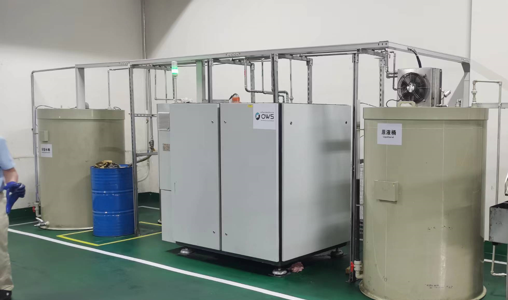
Waste liquid treatment system
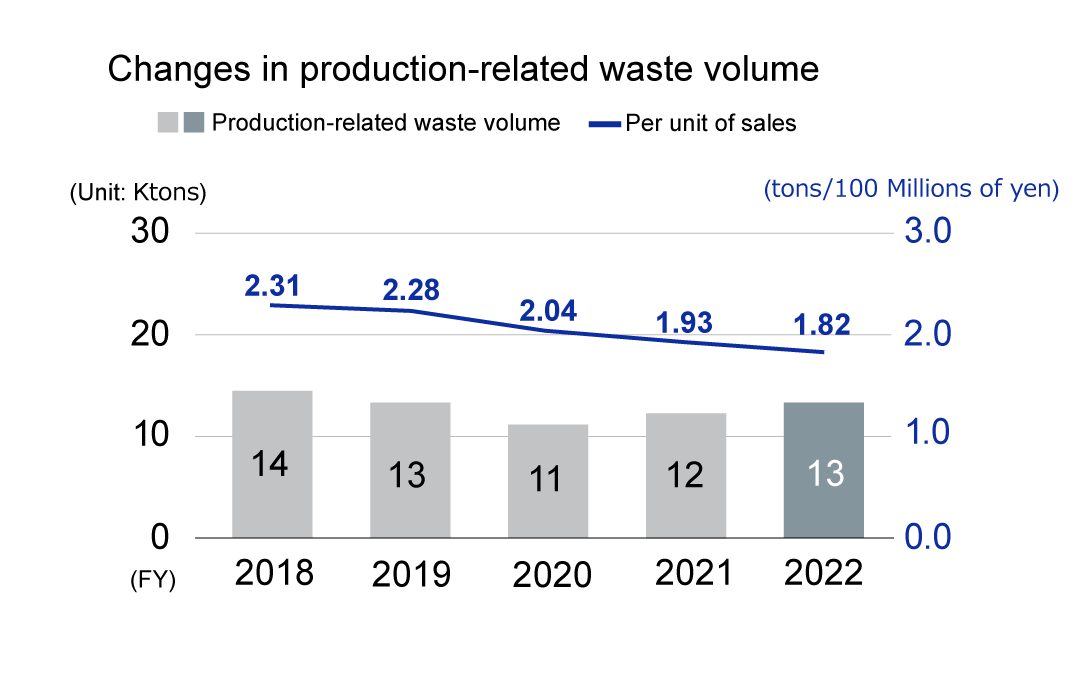
- Per unit of sales is calculated using a fixed exchange rate.
| FY2022 | FY2023 | FY2024 | FY2025 | |
|---|---|---|---|---|
| Volume of hazardous waste(t) | 55.0 | 68.3 | 76.9 | 87.6 |
The Brother Group's Water Usage Reduction Activities
Securing safe water resources is an important environmental challenge common across the globe. The Brother Group has been monitoring all of our sites regularly, evaluating water risks at each site every year, and working to reduce water consumption to fulfill our responsibilities as an operator of manufacturing facilities in many countries and regions.
Brother Machinery India Private Ltd. has introduced a wastewater treatment system at its factory. The system treats wastewater generated on-site in accordance with applicable water quality standards. Instead of discharging the treated water into public water bodies, such as rivers and sewer systems, it is reused for irrigating the grounds and planted areas within the site, thereby contributing to local water resource conservation and greening.
Brother Industries (Philippines), Inc. has introduced a rainwater harvesting system. By utilizing approximately 14,000 m3 of rainwater annually, the system contributes to reducing water usage.
Water circulation efforts at Brother Machinery Xian Co., Ltd.
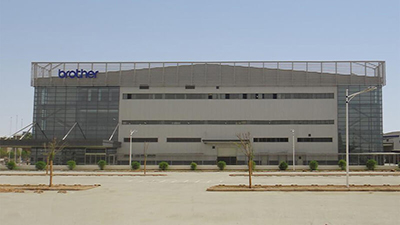
Brother Machinery Xian Co., Ltd. (BMX) is located in an area with relatively high water risk since water resources are not abundant there. In FY2018, as part of an effort to circulate water, BMX installed a rainwater collection tank inside its site and is continuing to use the collected water for maintaining greenery.
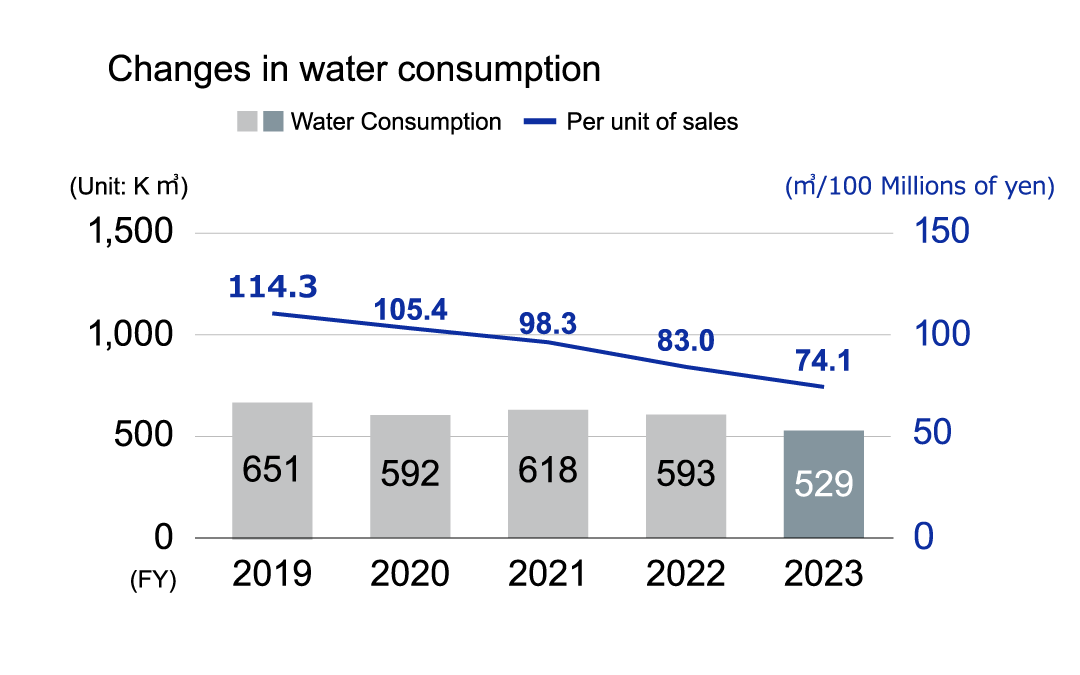
- Per unit of sales is calculated using a fixed exchange rate.
Scope of aggregation
| After FY2025 |
|---|
| Eight business sites in Japan (head office of Brother Industries, Ltd., Mizuho Factory, Hoshizaki Factory, Minato Factory, Momozono Factory, Kariya Factory, Research & Development Center, and Logistics Center), Nissei Corporation, Nissei Gear Motor MFG. (Changzhou) Co., Ltd., Mie Brother Precision Industries, Ltd., Brother Industries (U.K.) Ltd., Brother Industries (Slovakia) s.r.o., Taiwan Brother Industries, Ltd., Zhuhai Brother Industries, Co., Ltd., Brother Machinery Xian Co., Ltd., Brother Technology (Shenzhen) Ltd., Brother Industries (Philippines), Brother Industries (Vietnam) Ltd. and Brother Industries Saigon, Ltd., Inc., Brother Machinery India Private Ltd., Domino Group(Domino U.K. Ltd., Citronix Inc., Domino China Ltd., Domino Laser GmbH, Domino Printech India LLP, Domino Graph Tech AG, Post Jet Systems Ltd., Domino Print and Apply AB, Domino Printing Technology Ltd., Domino U.K. Ltd. (Liverpool), Lake Image Systems Inc, Domino North America (Ink plant, Fluids), Lake Image Systems Ltd) |
Water Intake, Wastewater Volume, Volume of Water Recycled
| FY2021 | FY2022 | FY2023 | FY2024 | FY2025 | ||
|---|---|---|---|---|---|---|
| Water intake(m3) | Clean water | 506,166 | 470,172 | 408,991 | 446,818 | 466,221 |
| Industrial water | 0 | 0 | 0 | 0 | 0 | |
| Under-ground water | 111,697 | 123,034 | 119,904 | 151,316 | 148,912 | |
| Wastewater volume(m3) | Public waters | 170,392 | 150,453 | 110,928 | 126,247 | 142,825 |
| Sewer system | 372,721 | 369,193 | 333,406 | 375,282 | 364,369 | |
| Others | 150 | 149 | 36 | 0 | 3,329 | |
| Volume of water recycled(m3) | 2,978 | 5,385 | 8,717 | 16,354 | 25,571 | |
| Percent of water recycled(%) | 0.5 | 1.0 | 1.9 | 3.2 | 4.8 | |
For the list of applicable sites, see page 5 of "Material balance" [PDF/278KB].
![[Open PDF File]](/-/media/global/common/img/file/icon-pdf.ashx)
2026 CDP Questionnaire
CDP (formerly Carbon Disclosure Project) is an international environmental organization founded in 2000, whose disclosure system has become the global standard for environmental disclosure in the world economy.
CDP's environmental data is used by financial markets, policy initiatives, and various other stakeholders.
Brother Industries, Ltd. has been participating in CDP Climate Change since 2011 and CDP Water Security since 2015, and responding to the questionnaires.
- In 2024, questions regarding Climate change, Forests, Water security, Plastics, and Biodiversity were integrated into the CDP Questionnaire.